Unlock Your Confidence: The Best DIY Courses for Women Near You

Unlock Your Confidence: The Best DIY Courses for Women Near You

Unlock Your Confidence: The Best DIY Courses for Women Near You

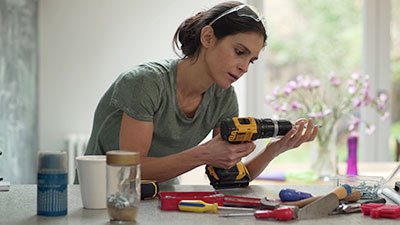
If you’re ready to roll up your sleeves and get practical, you’re in the right place. Whether you want to put up shelves, fix a leaky tap, master power tools, or simply try something new, there are fantastic DIY courses for women near you; right here in the UK. These hands-on classes are all about building confidence, learning real skills, and connecting with supportive, like-minded women. You don’t need any experience, just a bit of curiosity and the willingness to have a go!

Why Take a DIY Course?

Joining a DIY course is about so much more than learning to use a drill or hang a picture straight (though you’ll do that too!). Here’s what you’ll really gain:

Confidence that lasts: There’s nothing like the feeling of fixing something yourself. Each new skill you learn makes the next one feel that bit easier.

Creativity and stress relief: Getting stuck into a project is a brilliant way to unwind and express yourself. (and let’s be honest, hitting things with hammers is a marvellous stress-relief)

Problem-solving skills: DIY is all about finding solutions, thinking on your feet, and celebrating those “I did that!” moments.

A supportive community: DIY courses should be friendly, relaxed, and judgement-free. You’ll meet other women who are just as keen to learn as you are.

Practical know-how: From basic repairs to bigger projects, you’ll gain skills that save you money and make you more independent at home.

How to Choose the Right DIY Course for You

There are more and more DIY courses for women near you, so think about what you’d most like to achieve. Are you a total beginner, or looking to take your skills up a notch? Do you want to focus on plumbing, power tools, decorating—or just get a solid foundation in all things DIY?

Skill level: If you’re starting from scratch, look for beginner-friendly courses with lots of hands-on practice.

Format: Some people love the buzz of a face-to-face workshop, while others prefer learning at home or online. Pick what works for your lifestyle.

Atmosphere: The best courses (like ours at bePractical DIY in Bristol!) are supportive, small-group, and designed to make you feel comfortable asking questions and having a go.

Top UK DIY Course Providers for Women

Here’s a quick round-up of some brilliant places offering DIY courses for women near you:

bePractical DIY (Bristol)

That’s us! We specialise in DIY, Power Tool, and Plumbing courses for women at all levels. Our mission is to create a safe, welcoming space where women can build practical skills, ask questions, and leave feeling genuinely confident. We also run women-only DIY Clubs in the evenings, and offer back-to-back courses on Fridays and Saturdays for those travelling from further afield. If you’re looking for DIY courses for women near Bristol—or want a full day of learning and laughs—you’ll fit right in.

Touchwood South West (North Devon)

Run by the inspiring Astrid Arnold, Touchwood South West offers a range of DIY and construction courses for women. Their ethos is all about empowerment and normalising practical skills for everyone.

DIY Courses for Women: Touchwood South West

The Makershed ( Bristol)

Our neighbours in Bristol, who offer a range of Woodwork and Furniture-making. Although they don’t run courses exclusively for women, Makershed is female-owned and is an extremely welcoming and friendly space for hands-on practical learning. 

DIY for Women (Cardigan, West Wales)

From one-day basics to immersive weekend workshops, these courses cover everything from tool skills to building garden cabins. Perfect if you’re near Cardigan and want to build confidence fast.

Scouse Girl Timber (Liverpool)

A friendly half-day masterclass for women, focusing on the basics of hand and power tools in a supportive group.

DIY Courses for women: ScouseGirlsTimber

The Goodlife Centre (London)

Beginner-friendly DIY classes for homeowners and tenants, with plenty of hands-on practice and all materials provided.

Ash & Co (Hampshire)

Not exclusively for women, but their DIY Beginners courses are very welcoming and practical.

DIY Courses for Women: Ash & Co

The DIY School (Manchester)

Have delivered a range for DIY Courses in Stockport for some time, and have recently launched women-only DIY courses, covering everything from decorating to tiling and plastering.

DIY Courses for Women: The DIY School

Real Stories: Women Who’ve Gained DIY Confidence

The impact of DIY courses for women goes way beyond the classroom. Women from all walks of life have discovered new passions, saved money, and even started their own businesses after learning the basics. Whether it’s finally tackling that home project, helping out friends and family, or just feeling more independent, the confidence boost is real, and it lasts.

Take Mary, for example. After years of living alone following her divorce, she was confident in so many areas of her life, except DIY. Her ex-husband had always insisted that using a drill was “too difficult” and never let her have a go. When Mary signed up for a DIY course with a friend, it was a total game-changer. She found the experience so empowering that the very next day, she bought herself a drill, stocked up on wall plugs and screws, and started putting up hanging baskets in her garden, pictures on her walls, and shelves in her bedroom. Since then, she hasn’t looked back. Mary has joined several more courses, learned to use all sorts of power tools, and is now confidently tackling bigger projects around her home.


Tips for Getting the Most Out of Your DIY Course

Set a clear goal: Whether it’s learning to use a drill or finishing a specific project, knowing what you want to achieve keeps you motivated.

Create a workspace: Even a small, tidy corner will make practising at home much easier.

Be patient with yourself: Mistakes are part of learning—ask questions, try again, and celebrate every win.

Stay connected: Join course WhatsApp groups or online forums to keep sharing tips and encouragement.

Ready to Get Practical?

If you’re searching for “DIY courses for women near me,” you’ve already taken the first step. There’s a supportive community waiting to help you build skills, confidence, and friendships, right here in Bristol, across the UK, and beyond.
So, why wait? Book your spot, bring a friend, or come solo and meet new people. Your DIY journey starts now, and who knows where it’ll take you?


Happy DIYing!

FAQ

What is a DIY Course?

A DIY course is a structured program that teaches individuals practical skills for home improvement, repairs, and creative projects.

Who can benefit from a DIY course?

Anyone can benefit from a DIY course, especially beginners looking to build confidence and learn essential home improvement skills.

What topics are covered in your DIY home improvement courses?

Topics include using  hand tools and power tools, carrying out basic repairs in the home, woodworking and carpentry projects, plumbing skills, electrical work, and creative projects tailored to individual needs.

What should I bring?

We recommend wearing old clothing, and sturdy shoes. In the colder months, we suggest that these are warm, or layered. It can get cold in the Workshop.

If you have long hair, we strongly recommend that, for your own safety,  you keep it tied up while you are using any power tools.

If you would like to bring your own PPE (Personal Protectve Equipment), please feel free to do so. We will provide PPE, but we know that some people would prefer to use their own. (We recommend that you mark them up with your names, so that you can identify them)

Are your courses suitable for women?

Definitely. bePractical DIY specialises in empowering women to tackle home projects with confidence. However, we encourage anyone to sign up to our DIY courses, regardless of gender. We provide a safe space for anyone to learn hands-on practical skills. 

We also run Women-only DIY Clubs in the evenings. 

Can I do TWO Courses on the Same Day?

Yes. That’s no problem. We run courses that follow on from each other on the same, so that you can.

We offer a £20 Discount when you book TWO Courses at the same time. 

We guarantee that the days will be fun and empowering, but they may also be tiring. Remember you will be learning lots of new information and skills, and so may find the day tiring. Please bear that in mind.

What tools and materials do I need for DIY Training?

We provide all tools and materials. You only need to bring yourself and an enthusiam to learn.
You’re very welcome to bring your own tools, if you’d like to learn how to use them and get some practice. 

How long do DIY workshops typically last?

Our DIY workshops vary in length, depending on your need.

We run 2-hour long Bitesize courses, to give you a taster of a DIY Skill.

We run several Half-Day courses in general  DIY skills, DIY Plumbing skills and Carpentry Skills.

We also run evening DIY Clubs – 2 hours each week over a 4-week term 

How do I book, and where are you based?

You can book online at bePractical DIY.

We’re based in Bristol, with small group classes for lots of personal attention.

Can I buy this DIY Course as a gift?

Absolutely. Great idea. The perfect gift for the persoon who wants to build some self-confidence: Gift vouchers are available here.

Can I take DIY lessons at home?

Yes, we offer personalised DIY lessons, with our DIY Assist Service,  in your home to help you tackle specific projects.

We come to your home to help you work through your DIY Jobs list.

What if i have a question after the course?

We offer ongoing support by email, WhatsApp, or phone. We know how important it it to have support when you are doing your DIY projects. That’s why we’re here.

We’ll also send you comprehensive follow-up notes for the course, so that you don’t have to take notes. We want you to get as much out of the course as possible. 

No such thing as a daft question here!

Got another Question?

Drop us an email, or send us a message using our Online Contact Form

4 Things you should do when you move into a New Home

4 Things you should do when you move into a New Home

4 Things you should do when you move into a New Home

The Essential Stuff You Should Know

This may not be what you first think of when you move into a new home, but it could save you alot of money. Think of this as a “getting to know your home” exercise.

These are essental checks thatyou should make in your New Home.  They could save you money and might even save your life. They will definitely stop a plumber from giving you that pitying look when you’re not sure where the water turns off.

Step 1:

Put the Kettle on

We all know nothing productive happens without a cuppa first. So, brew up and let’s crack on.

Step 2:

  Find Your Fusebox

You might think you know where the Consumer Unit (fuse box, for us mere mortals) is, but let’s be sure, shall we?


Now, ask yourself these important questions:

Consumer Unit with TWO RCDS

Can I turn it off in an Emergency?

Go on, try switching it off and back on again. If it’s buried at the back of a cupboard, do yourself a favour and keep the path clear – no one wants to dig through old paint cans or a mountain of camping gear in an emergency. Also, maybe avoid storing anything flammable in there? Just a thought.

Is it labelled properly?

Can you clearly tell which switch controls what, or does it feel more like a raffle? If it’s the latter, sorting that out should be a priority. If you’re not sure how to do this, check out our post on Consumer Units

Do you have an RCD?

(Residual Current Device)

If you’ve no idea what that is, have a look at Electrical Safety First, who explain what they are, and why they are an extremely good thing to have. It’s important.

If you do have one, test it! Press the “T” or “Test” Button and make sure it’s still doing its job. A little maintenance never hurts.

What type of Consumer Unit do you have?

This probably seems a bit of strange question, but its good to know the answer. You may have listened to your Solicitor’s advice and had an electrical survey carried out as part of the buying process. If you did, you should know a bit more about this, and should have a certificate to refer to. If you’re not sure what the certificate actually tells you, go back to the electrician who carried out the inspection for you. They can explain. Failing that, you can always contact us, and we can explain it to you.

If you didn’t have an electrical inspection, check out our post on Consumer Units – Know your Stuff. There’s a bit of useful information there, explaining what you’e looking.

Look for a Smoke & Heat Detectors

Hopefully your new Home has Smoke and Heat Detectors installed. If they do, please give them a quick Test, by pressing the TEST button. Check the Expiry date while you’re there.

If you can’t find any Smoke/Heat Detectors, or they are past their expiry date, please make getting new ones installed a priority.

Check out our post on Smoke Detector Safety, if you need more information

And lastly……..Take a Meter Reading

You don’t want to be paying for the last occupants’ Electricity, so take a Meter reading and submit it to your supplier. Ideally, take a photo of the reading, so that you have a Time & Date Stamp to refer back to.

Step 3:

Find out where your Water turns off

You’d be surprised how many people have no clue how to turn off their water. In fact, a lot of people who come on our DIY courses haven’t a clue either. I get it – it’s not something you think about until water’s gushing from somewhere it really shouldn’t be. But trust me, you don’t want to be on a frantic treasure hunt while the insurance claim’s ticking up.

1. Start Outside – Look for the Pavement cover

You’ll probably find a small cover near your front gate. That’s often where the external stopcock is installed. If you live in a flat, identifying which one’s yours can be a bit of a guessing game. Turning them off one by one works, but it might lead to some awkward neighbourly encounters (especially if they’re mid-shower).

It should look something like this. It might even have “Water” written on it:

Take a Meter Reading

If you find it, and it has a meter, take a meter reading. Again, I would take a photo, just for posterity.

Its also worth double-checking that it doesn’t keep running when you’ve turned the supply off. If it does, then you may be paying for someone else’s supply. Rare, but not impossible

2. Check Indoors

The usual suspects are under the kitchen sink or in a utility room, but I’ve come across them in all sorts of weird places – under floorboards, hidden in random cupboards. Start with the obvious and work your way to the downright bizarre.

Check out our other post on Finding Your Stop Tap

3. Still Can’t Find It?

Ask your new neighbours. They might have the same setup and could save you some time. If that doesn’t work, contact your water supplier. They might have a record of it.

If you’re still out of luck, put it on your to-do list and get a plumber involved. They can install an Internal stop tap in a more sensible spot.

Step 4:

Find out where your Gas/Oil turns off

Your gas meter is likely to be near the front of the house, possibly in a little box outside. Make sure you can turn it off without too much faff. If it’s locked up, get yourself a meter box key. They’re cheap as chips at a local DIY/Hardware store.

LPG or Oil

These tanks aren’t exactly discreet – you’ve probably tripped over them a few times already. Just double-check you know where the shut-off valve is, and maybe have a quick peek at security while you’re at it – oil theft’s a thing in the countryside.

Look for a Carbon Monoxide Detector

If you have a Gas or solid-fuel Boiler, or a multi-fuel stove, you also need to have a Carbon-Monoxide Detector.

If you can’t find one in your new home, please pop down to the nearest DIY/Hardware store/Supermarket & buy one NOW.

You may have no idea when the last service was carried out on these appliances.

You don’t want your first night in your new home to be your last. I know that sounds dramatic, but Carbon Monoxide is invisible. It doesn’t smell, and it can kill you very quickly.

Step 5:

Enjoy your New Home

You’ve just ticked off three essential checks that most people ignore until disaster strikes. Sure, dealing with a crisis is a crash course in home maintenance, but wouldn’t you rather be prepared than panicked?

If you’re renting, your landlord really should have told you all this. If they didn’t, maybe give them a gentle nudge – it’s in their best interests too, after all!

Give yourself a Round of Applause

FAQ

What do I do if I can't find my Stop Tap

Contact your local Water Supplier as soon as possible. They may know where it is. If you don’t have an external water supply, they wll supply one for you.

Talk to your neighbours. If the layout of their property is the same as yours, they may well know where the Stop tap was originally installed.

Neighbours are a very useful source of information about your home.

What if I can't switch my RCD back on?

This suggests that there is either a fault with the RCD, or wth your installtion. 
Check out our post “Help, I have no Power”
This will take you through the procedure to follow to locate the source of a fault, and get your system back up an running

Can you replace a Smoke Detector yourself?

Yes. Most mains-operated Smoke and Heat detectors, can easily be replaced. The Detector part usually slides or twists off the base, so that you can disconnect them. andreplace with a new one.
Make sure that you turn the power to the circuit off, before you disconnect the smoke detector.

Smoke Detectors may be on their own circuit, or they may be part of a lighting circuits.

Some Smoke Detectors may be so old that they are no longer manufactured. Sometimes Manufacturers make a new model which fits the base of your model. Check out the SafeLincs Website for “Backward Compatibility”

Who can benefit from a DIY course?

Anyone can benefit from a DIY course, especially beginners looking to build confidence and learn essential home improvement skills.

What topics are covered in your DIY home improvement courses?

Topics include using  hand tools and power tools, carrying out basic repairs in the home, woodworking and carpentry projects, plumbing skills, electrical work, and creative projects tailored to individual needs.

What should I bring?

We recommend wearing old clothing, and sturdy shoes. In the colder months, we suggest that these are warm, or layered. It can get cold in the Workshop.

If you have long hair, we strongly recommend that, for your own safety,  you keep it tied up while you are using any power tools.

If you would like to bring your own PPE (Personal Protectve Equipment), please feel free to do so. We will provide PPE, but we know that some people would prefer to use their own. (We recommend that you mark them up with your names, so that you can identify them)

Are your courses suitable for women?

Definitely. bePractical DIY specialises in empowering women to tackle home projects with confidence. However, we encourage anyone to sign up to our DIY courses, regardless of gender. We provide a safe space for anyone to learn hands-on practical skills. 

We also run Women-only DIY Clubs in the evenings. 

Can I do TWO Courses on the Same Day?

Yes. That’s no problem. We run courses that follow on from each other on the same, so that you can.

We offer a £20 Discount when you book TWO Courses at the same time. 

We guarantee that the days will be fun and empowering, but they may also be tiring. Remember you will be learning lots of new information and skills, and so may find the day tiring. Please bear that in mind.

What tools and materials do I need for DIY Training?

We provide all tools and materials. You only need to bring yourself and an enthusiam to learn.
You’re very welcome to bring your own tools, if you’d like to learn how to use them and get some practice. 

How long do DIY workshops typically last?

Our DIY workshops vary in length, depending on your need.

We run 2-hour long Bitesize courses, to give you a taster of a DIY Skill.

We run several Half-Day courses in general  DIY skills, DIY Plumbing skills and Carpentry Skills.

We also run evening DIY Clubs – 2 hours each week over a 4-week term 

How do I book, and where are you based?

You can book online at bePractical DIY.

We’re based in Bristol, with small group classes for lots of personal attention.

Can I buy this DIY Course as a gift?

Absolutely. Great idea. The perfect gift for the persoon who wants to build some self-confidence: Gift vouchers are available here.

Can I take DIY lessons at home?

Yes, we offer personalised DIY lessons, with our DIY Assist Service,  in your home to help you tackle specific projects.

We come to your home to help you work through your DIY Jobs list.

What if i have a question after the course?

We offer ongoing support by email, WhatsApp, or phone. We know how important it it to have support when you are doing your DIY projects. That’s why we’re here.

We’ll also send you comprehensive follow-up notes for the course, so that you don’t have to take notes. We want you to get as much out of the course as possible. 

No such thing as a daft question here!

Got another Question?

Drop us an email, or send us a message using our Online Contact Form

Consumer Units. What you need to know.

Consumer Units. What you need to know.

Consumer Units. What you need to know.

What is a Consumer Unit?

Your Consumer Unit (Fusebox) Explained

You might hear a Consumer Unit called different things: a Distribution Board, a Fuse Box. In the trade, it’s mostly called a Consumer Unit, or just CU for short, so let’s stick with that to keep it simple.

I’ll try not to bore you here, because this stuff matters, but I get it. Unless you’re an electrician, electrics aren’t exactly thrilling.

No matter what you call it, a Fusebox is what distributes electricity around your home. At its core, a CU should have a Main Switch, which lets you shut everything off if needed. You’ll also find various fuses or MCBs (Miniature Circuit Breakers) that control each circuit in your home.

If you’re lucky (and lots of people are these days), you might also have an RCD. If you’ve got two, great. If each circuit has its own, you’ve hit the jackpot.

Consumer Units come in all sorts of shapes, sizes, and safety levels. We’ll run through some of them below.

Keep reading…

1. Consumer Unit with Ceramic Rewireable Fuses

These are old-school and, honestly, look pretty cool (if you’re into that sort of thing). But they belong in a museum, not in your home. If you have one, it’s a good sign that you haven’t had certified electrical work done in ages, so call an electrician.

What it does:

This CU protects against circuit overloads—the fuse wire inside will break if there’s too much demand.

What it doesn’t do:

It won’t protect you from getting shocked or seriously hurt if there’s an earth fault.

Consumer Unit (Fusebox) with Ceramic Rewireable Fuses

What’s an Earth Fault?

It’s when an electrical current tries to escape to the ground (Earth). It is often caused by cutting a cable (e.g. by drilling into it) or a sudden appliance fault.

2. Consumer Unit with Rewireable Fuses

These are still fairly common and do the basics.

What it does:

It stops you from overloading circuits by tripping a fuse. You can reset it by pressing a button or flipping a switch—way easier than the older CUs.

What it doesn’t do:

Like the older ones, it won’t protect against electrocution from an earth fault.

If you have one of these, and you need some electrical work carried out, its very likely that you will need an upgrade to an RCBO Consumer Unit. Newer regulations prioritise safety and require RCDs on most parts of your electrical installation

Consumer Unit (Fusebox) with Rewireable Fuses

What is an RCD?

An RCD (Residual Current Device) is a nifty safety gadget that trips when it detects an earth fault. Potentially it will save your life.

At its most basic level, it constantly monitors the current in your house. If it detects an imbalance, it assumes that the current has gone into something it shouldn’t have  – you. It  should trip within milliseconds. This will save your life.

If you have issues with your RCD Tripping a lot, you need to get it checked out by an Electrician. There’s a reason why its happening, which needs to be investigated and resolved, to keep you safe. 

If yur RCD trips and then won’t re-set, check out our helpful post: Help, I have no Power

3. Consumer Unit with an RCD as Main Switch

This setup has an RCD that acts as the main switch. It’s better than nothing, but if there’s a fault on any circuit, the whole thing shuts down. Not ideal if you’re halfway through cooking dinner.

What it does:

It gives you some protection against earth faults, which is a step up from the older units.

Consumer Unit (Fusebox) with Single RCD Main Switch

4. Consumer Unit with Two/Dual RCDs

For a while, this was the go-to upgrade. These CUs usually have a plastic casing (newer ones are metal for better fire protection) and split your circuits into two groups, each with its own RCD.

What it does:
If one circuit trips an RCD, only half your house goes down. The other RCD keeps things running, which is more convenient but still a bit of a hassle.

You can find these CUs sold cheap in DIY stores because they don’t meet current regulations any more. Don’t be tempted—it’s not a bargain.

And you shouldn’t even be thinking abut carrying out that kind of electrical work anyway. 

Consumer Unit (Fusebox) with Dual RCD & Main Switch

5. Consumer Unit with Individual RCBOs

This is what electricians install nowadays to meet the latest safety standards.

What it does:

This setup has a metal casing and a Main Switch, with each circuit controlled by its own RCBO (a combined fuse and RCD). If a fault occurs, only the affected circuit is shut down, so the rest of your home stays powered. It also likely includes a Surge Protection Device (SPD) to shield sensitive electronics like TVs and computers.

It’s more expensive but offers way better protection and convenience, especially in older homes where wiring can be dodgy.

Consumer Unit (Fusebox) with Individual RCBOs

Labelling

You’ll notice that labelling on CUs can be hit or miss. It’s really handy to know which fuse or RCBO controls which circuit, especially in an emergency.

If your CU isn’t well labelled, you can fix that yourself in about an hour. Get some clean labels and a fine-tip pen. Go through each MCB one by one: Switch it off and see what stops working. Note what each circuit controls and label accordingly.

Keep a record of this info near the CU; it could save you a lot of hassle (or even your life) later.
It’ll make things easier for any electrician working in your home, and so save you money. 

If you have issues with your RCD not resetting after it has tripped, check out our handy post: Help, I have no Power

Testing your RCD

Now that you’re looking at your Fusebox with a bit more interest, you might notice that there’s a sticker which tells you to test your RCD Quarterly or every 6 moinths. Most people never even notice that its there. It is there for a reason. if you want to know why, check out our Post on Keeping Your Home Safe

FAQ

What if I can't switch my RCD back on?

This suggests that there is either a fault with the RCD, or wth your installtion. 
Check out our post “Help, I have no Power”
This will take you through the procedure to follow to locate the source of a fault, and get your system back up an running

Can you replace a Smoke Detector yourself?

Yes. Most mains-operated Smoke and Heat detectors, can easily be replaced. The Detector part usually slides or twists off the base, so that you can disconnect them. andreplace with a new one.
Make sure that you turn the power to the circuit off, before you disconnect the smoke detector.

Smoke Detectors may be on their own circuit, or they may be part of a lighting circuits.

Some Smoke Detectors may be so old that they are no longer manufactured. Sometimes Manufacturers make a new model which fits the base of your model. Check out the SafeLincs Website for “Backward Compatibility”

Who can benefit from a DIY course?

Anyone can benefit from a DIY course, especially beginners looking to build confidence and learn essential home improvement skills.

What topics are covered in your DIY home improvement courses?

Topics include using  hand tools and power tools, carrying out basic repairs in the home, woodworking and carpentry projects, plumbing skills, electrical work, and creative projects tailored to individual needs.

What should I bring?

We recommend wearing old clothing, and sturdy shoes. In the colder months, we suggest that these are warm, or layered. It can get cold in the Workshop.

If you have long hair, we strongly recommend that, for your own safety,  you keep it tied up while you are using any power tools.

If you would like to bring your own PPE (Personal Protectve Equipment), please feel free to do so. We will provide PPE, but we know that some people would prefer to use their own. (We recommend that you mark them up with your names, so that you can identify them)

Are your courses suitable for women?

Definitely. bePractical DIY specialises in empowering women to tackle home projects with confidence. However, we encourage anyone to sign up to our DIY courses, regardless of gender. We provide a safe space for anyone to learn hands-on practical skills. 

We also run Women-only DIY Clubs in the evenings. 

Can I do TWO Courses on the Same Day?

Yes. That’s no problem. We run courses that follow on from each other on the same, so that you can.

We offer a £20 Discount when you book TWO Courses at the same time. 

We guarantee that the days will be fun and empowering, but they may also be tiring. Remember you will be learning lots of new information and skills, and so may find the day tiring. Please bear that in mind.

What tools and materials do I need for DIY Training?

We provide all tools and materials. You only need to bring yourself and an enthusiam to learn.
You’re very welcome to bring your own tools, if you’d like to learn how to use them and get some practice. 

How long do DIY workshops typically last?

Our DIY workshops vary in length, depending on your need.

We run 2-hour long Bitesize courses, to give you a taster of a DIY Skill.

We run several Half-Day courses in general  DIY skills, DIY Plumbing skills and Carpentry Skills.

We also run evening DIY Clubs – 2 hours each week over a 4-week term 

How do I book, and where are you based?

You can book online at bePractical DIY.

We’re based in Bristol, with small group classes for lots of personal attention.

Can I buy this DIY Course as a gift?

Absolutely. Great idea. The perfect gift for the persoon who wants to build some self-confidence: Gift vouchers are available here.

Can I take DIY lessons at home?

Yes, we offer personalised DIY lessons, with our DIY Assist Service,  in your home to help you tackle specific projects.

We come to your home to help you work through your DIY Jobs list.

What if i have a question after the course?

We offer ongoing support by email, WhatsApp, or phone. We know how important it it to have support when you are doing your DIY projects. That’s why we’re here.

We’ll also send you comprehensive follow-up notes for the course, so that you don’t have to take notes. We want you to get as much out of the course as possible. 

No such thing as a daft question here!

Got another Question?

Drop us an email, or send us a message using our Online Contact Form