One of the most common questions I'm asked on our DIY Workshops is: “How do I know if it’s safe to drill into a wall?” It’s a really sensible question, because drilling in the wrong place could mean hitting hidden electrical cables or pipes.
That’s why understanding Electrical Safe Zones (now called “Prescribed Cable Zones” in the UK) is essential before you pick up your drill.
In the UK, Electrical Safe Zones are specific areas where electricians are allowed (and expected) to run cables behind your walls. The idea is to make wiring more predictable and keep everyone safer when drilling or nailing into walls. But “safe” can be a bit misleading – these zones are where you’re most likely to find cables!
Table of Contents
The most common question...
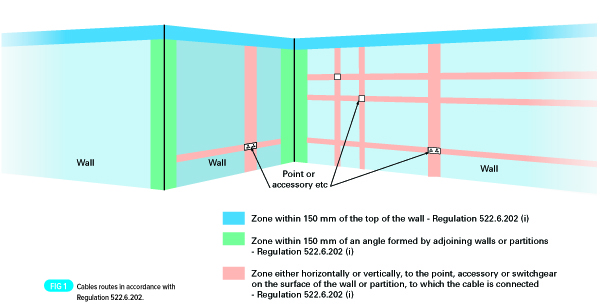
The Main "Electrical Safe Zones" on Walls
Horizontally or Vertically from Electrical Accessories
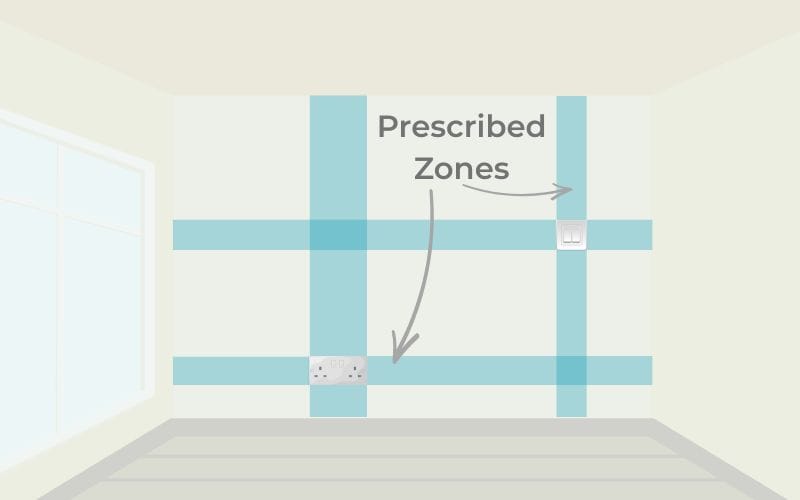
For example, if you see a plug socket, imagine a line running straight up to the ceiling and straight down to the floor – cables could be anywhere along that path.
The same goes for a line running left and right, at the height of the socket or switch, all the way to the next wall or obstacle.
Along the Top of a Wall
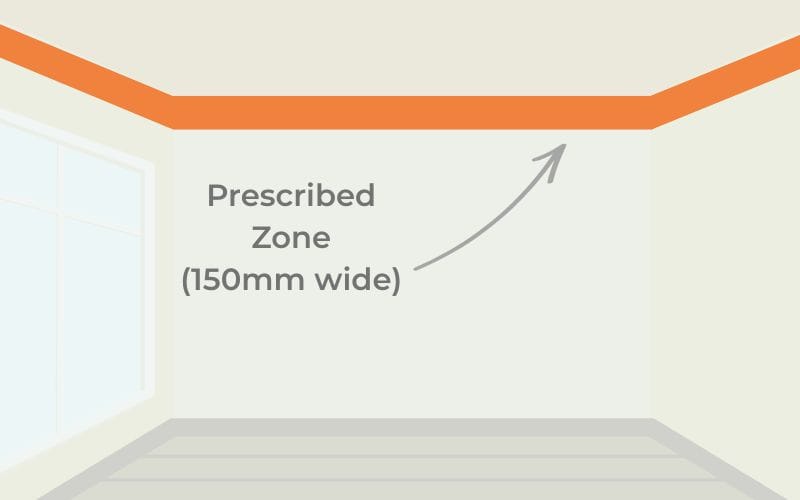
There’s a 150mm (6 inch) wide zone along the top of the wall, right where it meets the ceiling. Cables can be run horizontally here too.
Yep, pretty strange place to put cables, and it seems to be a hangover from the past, when we didn't have many electrical fittings, often just one socket per room. I have found cables in that location in the past (the hard way), but very rarely.
Corners where Two Walls Meet
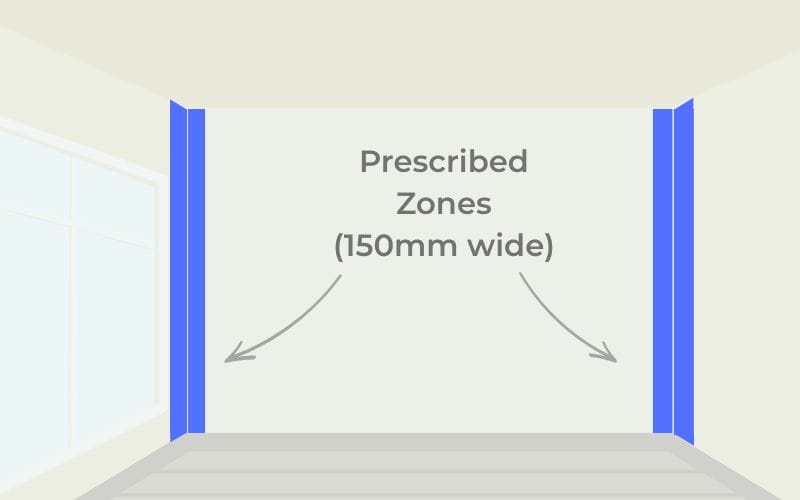
TOP TIP
If the wall is less than 100mm (4") thick, then the Safe Zones operate on both sides of the wall.
Action: Always check BOTH rooms before Drilling
If you have had some electrical work carried out, it is always worth checking the Electrical Certificate (if you were issued with one) as it may have some important information about any deviations from the rules.
Electricians in the past did not have these rules. Cables could be, and were run in all sorts of odd places.
But older houses, or homes where DIY electrical work has been done, might have cables running anywhere: diagonally, in random places, or with sudden bends. If in doubt, always err on the side of caution.
SAFETY NOTE
If you have any doubts:
TURN OFF THE CONSUMER UNIT BEFORE YOU DRILL
How to drill into a Wall Safely
Check for Sockets, Switches, and Light Fittings:
Use a Cable Detector
These can be handy tools to help spot hidden cables and pipes. However, I am reluctant to use them, as they can give false positives and negatives, particularly the cheaper ones.
Check your Electrical Certificate
If you've had recent work carried out, see if there are any notes about cable routes.
Where NOT to drill in a Wall
Still not sure?
If you’re ever in doubt, get in touch or join a workshop for hands-on guidance.
SAFETY NOTE
If you have any doubts:
TURN OFF THE CONSUMER UNIT BEFORE YOU DRILL
Drilling into Ceilings & Floors
Drilling into Ceilings
Cables should be run through the centre of joists, at least 50mm from the ceiling or floor surface. But in reality, especially in older homes, cables might be anywhere, including just above your plasterboard.
It is not always possible to follow this rule. There are often existing holes and notches in a joist. It is extremely likely that in the past, cables will have been run all over the place.
Because it is not always possible to run cables this way, the current electrical regulations allow cables to be run outside the zones, provided they are protected by an RCD (Residual Current device)
If the wiring in your home is old and/or you have a Consumer Unit which does not have an RCD, then you should be even more cautious.
Drilling into Floors
Relaying Floorboards can be a bit of a hazard, so be extra careful if you are screwing down Floorboards. Generally cables and pipes are likely to be running up the middle of a floorboard across a Joist.
BUT if a screw or nail is missing from a floorboard, be careful before you screw one in. There may be a very good reason why there is no screw there - There may be a pipe or a cable running in just that spot.
And lastly.......
Can I trust the Safe Zones in my House?
Don't Panic!
There are some obvious checks that you need to carry out before you drill into anything in your house. Once you have made all the sensible checks, then get started.
Still Not Sure?
We cover all this (and lots more) in our DIY Workshops. You can learn how to drill into a wall safely & confidently, without any nasty surprises.
If you're ever in doubt, and just need to check something out, get in touch, or join a Workshop for hands-on guidance.