Keep Your Home and your Family Safe
4 Essential Checks to carry out in your home
Follow this simple guide to keep your Home Safe. These essential Proactive Home Maintenance tasks can be carried out on the weekends that the Clocks change. Its a great time to carry out these simple jobs to keep your home safe.
Nothing too strenuous. You probably won’t even need any tools. Just a few checks which could save you a bit of money, and possibly, even your life.
Table of Contents
So, what's it all about?
- Give your RCDs a bit of Exercise
- Check your Smoke & Heat Detectors are working & in date
- Check your Water Stop Tap & make sure it works
- Check your Carbon Monoxide Detector & make sure it works
Do this Twice a Year
If you’re reading this because your RCD has tripped, imagine how much easier life feels when you know what to do next.
I recommend doing this when the clocks change.
It happens twice a year, which is the perfect interval for carrying out these checks.
On Sunday morning, you’re going to be scratching your head, trying to remember how to reset the clock on the Microwave and the Oven.
(How many of us give up with clock in the car, and decide that living 6 months in the future is infinitely preferable to wading through a huge car manual trying to find the tiny paragraph dedicated to the overly complicated clock setting?)
Anyway, I’m not really worried about the car. Its your Home, and in fact, you & your family, that matters this weekend. Keeping your Home safe is simple, and quick. Let me explain…..
Step 1: Give Your RCDs a bit of exercise
The clocks going back (or forwards in March) is the trigger. It happens twice a year, and that’s the recommended interval for exercising your RCDs.
Top Tip
Don't want to teach you to suck eggs, but.....
DO THIS BEFORE YOU RESET THE CLOCKS
What is an RCD?

Where will you find your RCDs?
Go and find your Consumer Unit (Fuse box) - see above. They will be marked as either an RCD, and RCBO or an RCCB
Why do RCDs need exercise?
Who knew?
Ok, I’m sure some of you are also asking what one of those is. If you’ve never heard of them, then please check out our Useful post on Tripping RCDs.
You can find out what they do, why they’re not only a good idea, but actually essential for keeping you safe. You’ll even learn what to do if they start tripping.
All you need to do, is press the little TEST or (T) button on the RCD, and it will switch off. (The lever will drop down) This will turn off the power to a number of circuits.

RCD Test Button

RCCB Test Button

RCBO Test Button

Old Style Lever RCD
All you need to do, is press the little TEST or (T) button on the RCD, and it will switch off. (The lever will drop down) This will turn off the power to a number of circuits.
Just reset the RCD by pushing the lever back up (Some Consumer Units need you to push the lever down a bit further, before you push it up).
Some of you may have a nice modern Consumer Unit, where each circuit is protected by its own RCD. These are called RCBOs. The same principle for these. Just press the TEST button, turn the circuit off, and then turn it back on.
That’s all you need to do.
Why should you do this?
RCDs (or RCBOs) play an essential role in keeping you safe. They monitor your electrical installation constantly. If they detect an imbalance in your system, they will switch off the cirucit which is causing the problem.
So, if you drill into a cable, or something nibbles through a cable, they should turn off immediately. You need them to be in tip top condition, so that they do this as quickly as possible, and save your life.
What if my RCD won't switch off?
If this happens, then your RCD is not doing its job properly. It proves how important it is to carry out this test.
You can try to manually turn the RCD off and on a couple of times, using the lever. This might encourage it to wake up and do its job properly.
Its possible that there is a fault on your system somewhere. Check out our "Help I have no power" Post to help you get it to reset properly
I recommend that you contact an Electrician on Monday, and arrange for them to come and check it out for you. You need your RCDs to be working. An electrician can test them properly for you.
Step 2: Check your Smoke Detectors
Test they work
I know we only think about these when the annoying chirping starts as the battery starts to fail. That generally happens in the winter, when the temperature drops in the middle of the night. Batteries struggle more in the cold weather.
Just press the Test Button on your Smoke Detector, and make sure that it goes off. If you have inter-connected Smoke Detectors, this should also set all the other Smoke Detectors of in the House.
Check the date
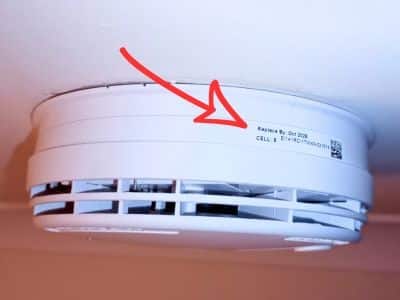
While you’re up the ladder, just check the Expiry Date on the Smoke Detector. If it’s already long past. You need to replace them.
This is something you can probably do yourself. Check out our post on Smoke Detectors.
If your Smoke Detector is quite old, check our Safelincs Website, where you can find a list of compatible Smoke Detectors.
If you’re not sure, then call an electrician.
Step 3: Check your Water Supply
Where to find your Stop Tap
Hopefully you know where your Wtaer Stop tap is . This is where your mains water supply turns off. If you don’t, you’re in good company, (in fact its a very large company). Unfortunately most people I have met who know where their Stop Tap is, have had to find it in an emergency, and that's why they know.
You’re about to rectify that situation, and find out where yours is, and check that it works. If you don't know where your Stop tap is, please read our other post : “How do I turn my water supply off?"
Its absolutely essential that you can turn your water off quickly in the event of an emergency
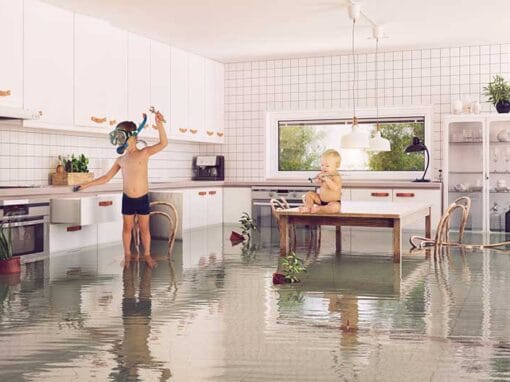
This is something that we mention all the time on our DIY Courses. Water damage is extremely expensive!
Why you need to find your Water Stop Tap
If you have a sudden plumbing emergency, then knowing where your Stop Tap is, that it’s accessible and that it turns off is going to save you loads of money.
Over time, Stop Taps can seize up. You really don’t want to find that yours has done that, when there is water pouring out of something that it shouldn’t be.
Take it from me, there is nothing like the sound of gushing water to stop your brain thinking clearly.
If you discover that the only way to turn your water supply off is outside on the pavement, you’re going to make sure that you have something helpful to lever the cover off the water stop tap easily accessible for future use.
If you come on our Essential Home Plumbing Course, we talk a lot about making sure you’re prepared for these eventualities.
Water damage is potentially very expensive. Insurance Companies really don’t like it.
So…..
- Find Your Stop Tap
- Turn it off. Make sure that it actually turns ALL the water OFF
- Turn the water back
Top Tip
If your Water Stop Tap is an old BRASS TAP, open the tap fully, when you turn the water back on. Then turn the tap back a ¼ Turn. This will give you some Wriggle room if your Stop Tap starts to seize up in the future.
If you’re in Bristol, and you’re struggling to turn your Stop Tap off, check out Bristol Water’s Website. They have lots of helpful information and support.
If you live outside Bristol, check out your own Water Supplier. If you’re lucky they might be one of the helpful ones
And finally……
Step 4: Check your CO Detectors
If you don’t have a Carbon-monoxide Detector, that suggests that you may not have had your had your boiler serviced recently. A Gas or Oil Engineer will check that you have one when they service your Boiler, and persuade you to get one.
Please get your boiler serviced every year. It will save your life.
That's it. You're done.
You have kept your home, yourself and your family safe for the next six months.
If you're a parent, maybe this is a good exercise to involve your children in. The more people who know how to deal with an emergency, the better.