×
×
COURSE DISCOUNT
Get £20 Off when you book TWO Courses
Book TWO Half-day courses at the same time, and get £20 off the Full Price

Advice
FAQ
Comments
Related DIY Advice
Find Us
Our DIY Courses
Advice
FAQ
Comments
Related DIY Advice
Find Us
Our Courses
Do you know where to turn off your water?
We have lost count of the number of homes we have been to where the customer has no idea how to turn their water off in an emergency. This is one of those life skills that is much easier to learn before you actually need it.
Looking for your Stop Tap for the first time, while water is pouring out of a broken pipe, can be extremely stressful.
Does it work?
I mean, can you actually turn it on or off. Its no good finding it, if it doesn’t actually work when you need it. You need to give it a try.
In fact, we recommend that you start a routine of checking regularly, just in case. Check out our post on Regular Home Maintenance. If you regularly practice for just such a scenario, give yourself a congratulatory pat on the back and move onto another topic.
If you’re not sure, or only have a vague idea, it might be worth reading a little bit further.
External Stop Taps
If you’re lucky, you may be able to turn your water off in the street outside your house. There will be a little metal or plastic manhole cover on the pavement looking much like this.
There is a often a clue stamped on the top. (If the word “GAS” is stamped on the top, you are not looking at your Water Stop tap):
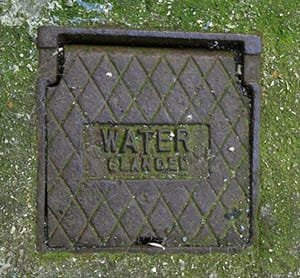

You may need a flat-headed screwdriver or other improvised tool to prise the top up. (Its quite common for the top to have been glued down during a pavement resurfacing. You don’t want to find this out in an emergency).
Very occasionally, you may come across a style which turns, rather than lifts. If attempts to prise the lid off fail, you may have one of these. They can be a bit awkward to get the lid off, and thankfully, they don’t seem to be installed these days. Just try twisting the lid, anti-cllockwise (in the direction you would turn a tap on), using the blade of the screwdriver, and hopefully it will move.
Once you have the lid off, you will see either an old style brass tap, or a newer plastic tap. If you’re unlucky, the Brass Tap may have seized up and won’t move. Sometimes it helps to try to open the tap rather than turn it off. This allows it to move, and then you can close it.
If you have a plastic tap, there should be a plastic key to operate it, under the lid. If you can’t see one, open up one of your neighbours’ Stop Tap covers and borrow theirs. (That maybe why you don’t have one). For some reason, the plastic taps are often quite hard to turn off completely. It might feel that you’re about to break the plastic key before it actually stops the final dribble.
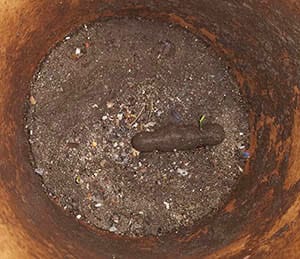
Not much chance of getting this old Stop Tap to move. Give it a go, with some WD40, but this maybe a call to Bristol Water

This should just need a quarter-turn using the Blue Handle.
Please note, the handle will come off in your hand. Don’t panic!
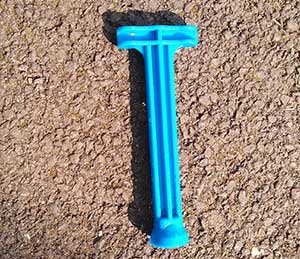
You will need this to turn your water off. It should be with your Stop Tap. If you can’t see it, check one of your neighbour’s Stop Taps, and borrow theirs.
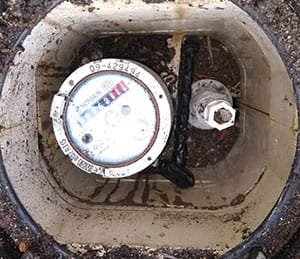
You may already have a a meter. In which case turning off your water supply should be a doddle
If the stop tap is a long way down, you may need a Stopcock Key to turn off your water. That’s something else you may not be able to get hold of in a hurry.
If your Water Stop Tap is an old BRASS TAP, open the tap fully, when you turn the water back on. Then turn the tap back a ¼ Turn.
This will give you some Wriggle room if your Stop Tap starts to seize up in the future.
At this point you should give yourself a pat on the back. You may, potentially, have saved yourself a lot of money
Your local Water supplier is responsible for the External Stop Tap. If it isn’t working, or is leaking, it is their responsibility to come out and repair it. Bristol Water have some useful information on their site about what do in this eventuality.
Internal Stop Taps
Some people have some idea about where their Stop Tap is inside their house.
A good place to start looking is under the Kitchen Sink. Usually, in my experience, this means pulling out an odd assortment of cleaning products, congealed packets of washing powder and cleaning cloths in order to actually reach it. However, when you get there, it may look like this:
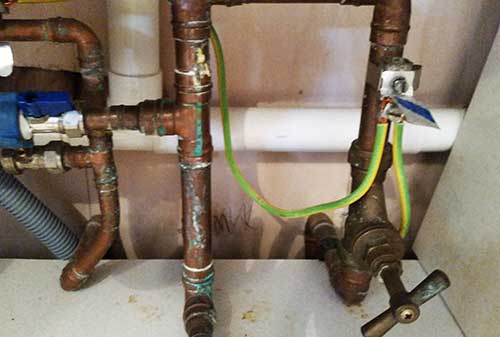
If it isn’t there, these are some of the other places worth looking:
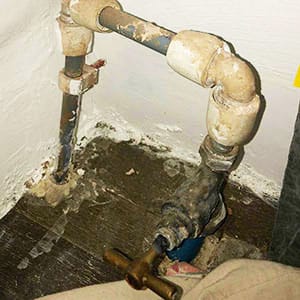
This horrible looking Stop Tap is coming up out of a solid floor.

This is more common than you would think. I find this most often in old Edwardian/Victorian Terraced Houses.
You’re not going to get to this in a hurry
If it isn’t in one of these places, then you can assume that either you don’t have one (not unusual), or that you may have one in an obscure position which nobody has know about for decades. If that is the case, even if yo do find it, the chances of it still being able to turn are pretty obscure.
At the next available opportunity, employ a Plumber to install an internal Stop tap for you in a sensible, accessible position.
Do you need an Internal Stop Tap?
In a word, no, but…..
There is no requirement for you to have an internal stop tap. If your external stop tap works well and is easily accessible, then you may not need to have one.
IHowever, in the event of an emergency, for instance a plumbing fitting failing in the first floor bathroom, the time it takes for you to run down the stairs, find a flat-headed implement (to prise off the cover), locate a headtorch, put your slippers on and get out to the external stop tap, several litres of water may have flooded through your Kitchen ceiling (and light fittings).
There are alternatives to the traditional Tap-like Stop-tap, which can be awkward and stiff to use. They require a degree of force and dexterity, and as we have discussed can be in inaccessible places.
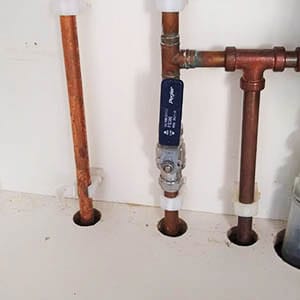
One option is a Lever-style tap, such as this. They have a very definite action, are easy to operate and are less likely to seize up.
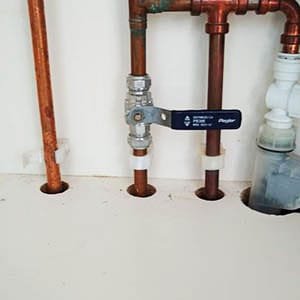
Another alternative is the Surestop Stoptap. This can be installed at a distance from the pipework. It is operated by what looks like a large Lightswitch. It employs a pressure switch, which means there is a very slight delay between pressing the switch, and the water flow stopping, but is still very quick and is extremely easy to operate.

It is recommended that this is installed as an additional means of isolating the water supply, so it is ideal if you have an external Stop-tap. It really should not be your only means of turning off the supply.
Whether you decide to have an internal stop-tap installed, or rely on an external stop-tap, we strongly urge you to go and check that one or other, or (in a perfect world, both of them) work and that you know how to access and operate them in a hurry.
Our Blog

So, what's it all about? Follow this simple guide to keep your Home Safe. These essential Proactive Home Maintenance...

The Essential Stuff You Should KnowThis may not be what you first think of when you move into a new home, but it could...
Cutting Copper & Plastic PipeHow do I cut copper pipe? is a question we are asked early on in our DIY Plumbing...
Check out our DIY Courses – there’s something for everyone
Discover the joy of learning how to do DIY at home in a fun and interactive way. If you’ve always wanted to explore the world of DIY but didn’t know where to start, this course is perfect for you.
Learn to use hand tools safely, discover exciting things about screws and finish off learning to use drills and impact drivers.
Fun! Fun! Fun!
£80
Ever wondered how to drill into a wall without making a mess ,or felt nervous about putting up a shelf? This is the place for you.
Join our DIY "Next Steps" Course to take your DIY skills to the next level, and learn to drill into all kinds of walls, put up shelves and choose the right fixing.
Its not magic. Its DIY
£80
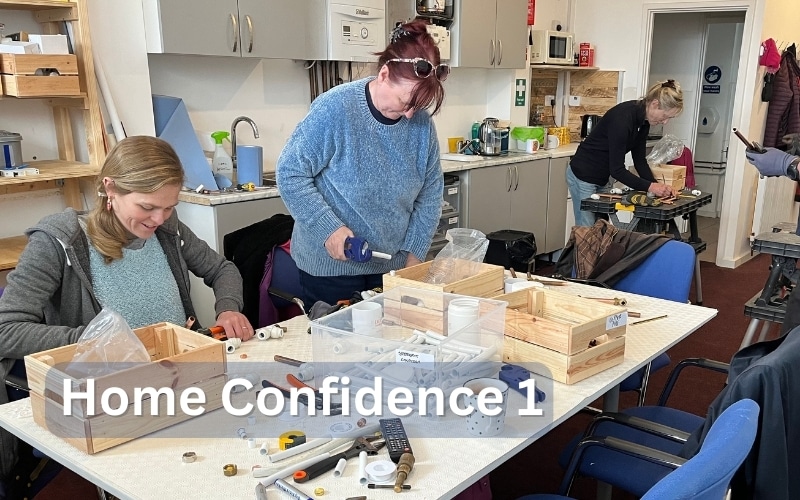
Master your home’s plumbing in one practical Half-day session
Learn the ins and outs of Home Plumbing at home in a fun and informative way.
No more panic, no more uncertainty, no more unnecessary emergency call-outs. This hands-on workshop gives you knowledge & confidence to handle common plumbing situations.
£80
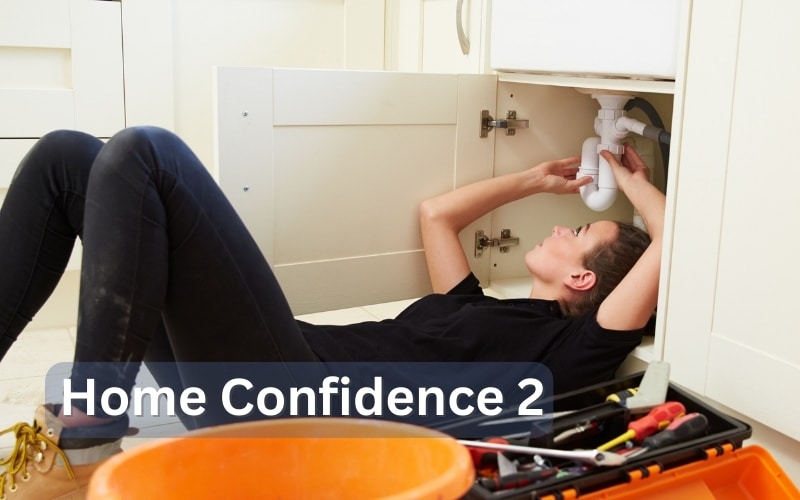
Want to understand how your Kitchen & Bathroom Plumbing works?
Learn all about Taps, Traps & Wastes on our half-day hands-on DIY Course for beginners.
Discover what goes wrong, why and how to prevent it happening. Save money by avoiding costly plumbing call-outs and disasters
£80

Always wanted beautiful wooden floors but worried about making a mistake? On this Half-Day Course, you’ll learn how to measure, cut, and fit flooring using power tools safely and confidently.
We’ll cover every step, from prep to finishing touches, so you can go home and install a new floor of your own.
£80

On this Half-Day Course, you'll learn how to measure, cut, and fit skirting boards with confidence.
We’ll show you how to use power tools safely, get neat corners, and create a professional finish.
All tools & materials included. No experience needed.
£80

On this Full-Day Course, you'll learn how to hide exposed pipes and awkward corners with confidence. This hands-on course teaches you how to measure, cut, and build simple boxing using power tools like jigsaws and drills, even if you’re a total beginner. Tidy up your space and pick up practical DIY skills in a friendly, supportive group. All tools and materials provided!
£130

Hands-on, Fun, DIY Club to get Beginners started opn their DIY Journey. Learn essential DIY Skills in a relaxed -friendly environment.
Go home with new skills to start making home improvements with confidence and success.
Evenings over a 4-week term
£110
(4-week term)

Supportive, friendly DIY Club, just for women.
Learn essential DIY Skills; Get hands-on with DIY projects so that you can start making a start on all those DIY projects at home.
Evenings over a 4-week term
£110
(4-week term)

Take your DIY skills to the next level. Build on our Beginners DIY Clubs to start planning projects and get them finished. Learn to use more Power tools to expand your DIY possibilities.
Very hands-on and confidence-building.
Evenings over a 4-week term
£110
(4-week term)
bePractical Ltd 33 Brislington Hill Bristol BS4 5BE
There is ample FREE parking at the rear of bePractical Workshop.
We are also on the main Bus route from Bristol to Bath, so there is a regular Bus Service to & from Bristol Temple Meads Railway Station.