Consumer Units. What you need to know.

Advice

FAQ

Comments

Related DIY Advice

Find Us

Our DIY Courses

Advice

FAQ

Comments

Related DIY Advice

Find Us

Our Courses

Consumer Units. What you need to know.

by | Aug 24, 2024

What is a Consumer Unit?

Your Consumer Unit (Fusebox) Explained

You might hear a Consumer Unit called different things: a Distribution Board, a Fuse Box. In the trade, it’s mostly called a Consumer Unit, or just CU for short, so let’s stick with that to keep it simple.

I’ll try not to bore you here, because this stuff matters, but I get it. Unless you’re an electrician, electrics aren’t exactly thrilling.

No matter what you call it, a Fusebox is what distributes electricity around your home. At its core, a CU should have a Main Switch, which lets you shut everything off if needed. You’ll also find various fuses or MCBs (Miniature Circuit Breakers) that control each circuit in your home.

If you’re lucky (and lots of people are these days), you might also have an RCD. If you’ve got two, great. If each circuit has its own, you’ve hit the jackpot.

Consumer Units come in all sorts of shapes, sizes, and safety levels. We’ll run through some of them below.

Keep reading…

1. Consumer Unit with Ceramic Rewireable Fuses

These are old-school and, honestly, look pretty cool (if you’re into that sort of thing). But they belong in a museum, not in your home. If you have one, it’s a good sign that you haven’t had certified electrical work done in ages, so call an electrician.

What it does:

This CU protects against circuit overloads—the fuse wire inside will break if there’s too much demand.

What it doesn’t do:

It won’t protect you from getting shocked or seriously hurt if there’s an earth fault.

Consumer Unit (Fusebox) with Ceramic Rewireable Fuses

What’s an Earth Fault?

It’s when an electrical current tries to escape to the ground (Earth). It is often caused by cutting a cable (e.g. by drilling into it) or a sudden appliance fault.

2. Consumer Unit with Rewireable Fuses

These are still fairly common and do the basics.

What it does:

It stops you from overloading circuits by tripping a fuse. You can reset it by pressing a button or flipping a switch—way easier than the older CUs.

What it doesn’t do:

Like the older ones, it won’t protect against electrocution from an earth fault.

If you have one of these, and you need some electrical work carried out, its very likely that you will need an upgrade to an RCBO Consumer Unit. Newer regulations prioritise safety and require RCDs on most parts of your electrical installation

Consumer Unit (Fusebox) with Rewireable Fuses

What is an RCD?

An RCD (Residual Current Device) is a nifty safety gadget that trips when it detects an earth fault. Potentially it will save your life.

At its most basic level, it constantly monitors the current in your house. If it detects an imbalance, it assumes that the current has gone into something it shouldn’t have  – you. It  should trip within milliseconds. This will save your life.

If you have issues with your RCD Tripping a lot, you need to get it checked out by an Electrician. There’s a reason why its happening, which needs to be investigated and resolved, to keep you safe. 

If yur RCD trips and then won’t re-set, check out our helpful post: Help, I have no Power

3. Consumer Unit with an RCD as Main Switch

This setup has an RCD that acts as the main switch. It’s better than nothing, but if there’s a fault on any circuit, the whole thing shuts down. Not ideal if you’re halfway through cooking dinner.

What it does:

It gives you some protection against earth faults, which is a step up from the older units.

Consumer Unit (Fusebox) with Single RCD Main Switch

4. Consumer Unit with Two/Dual RCDs

For a while, this was the go-to upgrade. These CUs usually have a plastic casing (newer ones are metal for better fire protection) and split your circuits into two groups, each with its own RCD.

What it does:
If one circuit trips an RCD, only half your house goes down. The other RCD keeps things running, which is more convenient but still a bit of a hassle.

You can find these CUs sold cheap in DIY stores because they don’t meet current regulations any more. Don’t be tempted—it’s not a bargain.

And you shouldn’t even be thinking abut carrying out that kind of electrical work anyway. 

Consumer Unit (Fusebox) with Dual RCD & Main Switch

5. Consumer Unit with Individual RCBOs

This is what electricians install nowadays to meet the latest safety standards.

What it does:

This setup has a metal casing and a Main Switch, with each circuit controlled by its own RCBO (a combined fuse and RCD). If a fault occurs, only the affected circuit is shut down, so the rest of your home stays powered. It also likely includes a Surge Protection Device (SPD) to shield sensitive electronics like TVs and computers.

It’s more expensive but offers way better protection and convenience, especially in older homes where wiring can be dodgy.

Consumer Unit (Fusebox) with Individual RCBOs

Labelling

You’ll notice that labelling on CUs can be hit or miss. It’s really handy to know which fuse or RCBO controls which circuit, especially in an emergency.

If your CU isn’t well labelled, you can fix that yourself in about an hour. Get some clean labels and a fine-tip pen. Go through each MCB one by one: Switch it off and see what stops working. Note what each circuit controls and label accordingly.

Keep a record of this info near the CU; it could save you a lot of hassle (or even your life) later.
It’ll make things easier for any electrician working in your home, and so save you money. 

If you have issues with your RCD not resetting after it has tripped, check out our handy post: Help, I have no Power

Testing your RCD

Now that you’re looking at your Fusebox with a bit more interest, you might notice that there’s a sticker which tells you to test your RCD Quarterly or every 6 moinths. Most people never even notice that its there. It is there for a reason. if you want to know why, check out our Post on Keeping Your Home Safe

FAQ

What if I can't switch my RCD back on?

This suggests that there is either a fault with the RCD, or wth your installtion. 
Check out our post “Help, I have no Power”
This will take you through the procedure to follow to locate the source of a fault, and get your system back up an running

Can you replace a Smoke Detector yourself?

Yes. Most mains-operated Smoke and Heat detectors, can easily be replaced. The Detector part usually slides or twists off the base, so that you can disconnect them. andreplace with a new one.
Make sure that you turn the power to the circuit off, before you disconnect the smoke detector.

Smoke Detectors may be on their own circuit, or they may be part of a lighting circuits.

Some Smoke Detectors may be so old that they are no longer manufactured. Sometimes Manufacturers make a new model which fits the base of your model. Check out the SafeLincs Website for “Backward Compatibility”

Who can benefit from a DIY course?

Anyone can benefit from a DIY course, especially beginners looking to build confidence and learn essential home improvement skills.

What topics are covered in your DIY home improvement courses?

Topics include using  hand tools and power tools, carrying out basic repairs in the home, woodworking and carpentry projects, plumbing skills, electrical work, and creative projects tailored to individual needs.

What should I bring?

We recommend wearing old clothing, and sturdy shoes. In the colder months, we suggest that these are warm, or layered. It can get cold in the Workshop.

If you have long hair, we strongly recommend that, for your own safety,  you keep it tied up while you are using any power tools.

If you would like to bring your own PPE (Personal Protectve Equipment), please feel free to do so. We will provide PPE, but we know that some people would prefer to use their own. (We recommend that you mark them up with your names, so that you can identify them)

Are your courses suitable for women?

Definitely. bePractical DIY specialises in empowering women to tackle home projects with confidence. However, we encourage anyone to sign up to our DIY courses, regardless of gender. We provide a safe space for anyone to learn hands-on practical skills. 

We also run Women-only DIY Clubs in the evenings. 

Can I do TWO Courses on the Same Day?

Yes. That’s no problem. We run courses that follow on from each other on the same, so that you can.

We offer a £20 Discount when you book TWO Courses at the same time. 

We guarantee that the days will be fun and empowering, but they may also be tiring. Remember you will be learning lots of new information and skills, and so may find the day tiring. Please bear that in mind.

What tools and materials do I need for DIY Training?

We provide all tools and materials. You only need to bring yourself and an enthusiam to learn.
You’re very welcome to bring your own tools, if you’d like to learn how to use them and get some practice. 

How long do DIY workshops typically last?

Our DIY workshops vary in length, depending on your need.

We run 2-hour long Bitesize courses, to give you a taster of a DIY Skill.

We run several Half-Day courses in general  DIY skills, DIY Plumbing skills and Carpentry Skills.

We also run evening DIY Clubs – 2 hours each week over a 4-week term 

How do I book, and where are you based?

You can book online at bePractical DIY.

We’re based in Bristol, with small group classes for lots of personal attention.

Can I buy this DIY Course as a gift?

Absolutely. Great idea. The perfect gift for the persoon who wants to build some self-confidence: Gift vouchers are available here.

Can I take DIY lessons at home?

Yes, we offer personalised DIY lessons, with our DIY Assist Service,  in your home to help you tackle specific projects.

We come to your home to help you work through your DIY Jobs list.

What if i have a question after the course?

We offer ongoing support by email, WhatsApp, or phone. We know how important it it to have support when you are doing your DIY projects. That’s why we’re here.

We’ll also send you comprehensive follow-up notes for the course, so that you don’t have to take notes. We want you to get as much out of the course as possible. 

No such thing as a daft question here!

Got another Question?

Drop us an email, or send us a message using our Online Contact Form

You May Also Like...

Check out our DIY Courses – there’s something for everyone

Our Half-Day DIY Courses

Nailing it - DIY Beginners Course in Bristol
Nailing it! DIY for Beginners

Discover the joy of learning how to do DIY at home in a fun and interactive way. If you’ve always wanted to explore the world of DIY but didn’t know where to start, this course is perfect for you.

Learn to use hand tools safely, discover exciting things about screws and finish off learning to use drills and impact drivers. 

Fun! Fun! Fun!

£80

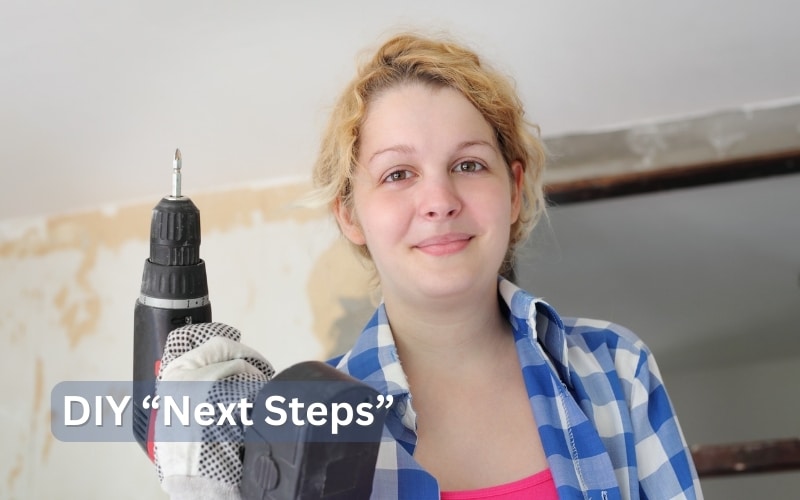
DIY Next Steps - Learn to use a drill on a Beginners DIY Course in Bristol
DIY "Next Steps"

Ever wondered how to drill into a wall without making a mess ,or felt nervous about putting up a shelf? This is the place for you.

Join our DIY "Next Steps" Course to take your DIY skills to the next level, and learn to drill into all kinds of walls, put up shelves and choose the right fixing.

Its not magic. Its DIY

£80

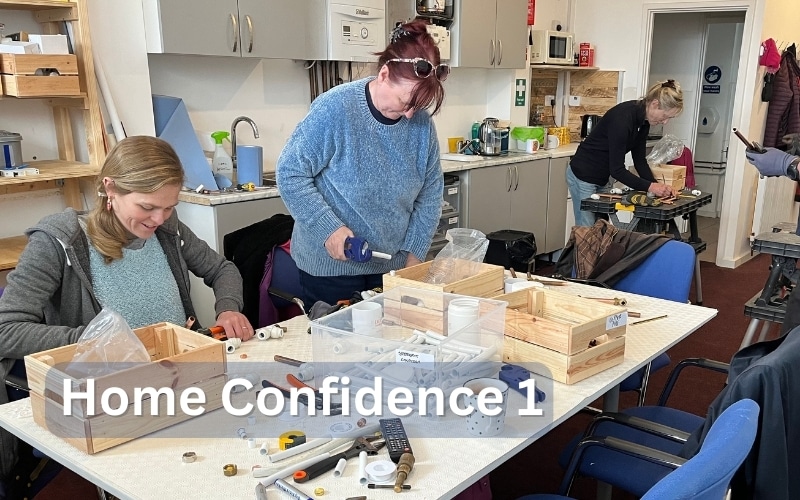
Learn Pluming skills on a Beginners DIY Course in Bristol
Home Confidence 1

Master your home’s plumbing in one practical Half-day session

Learn the ins and outs of Home Plumbing  at home in a fun and informative way.

No more panic, no more uncertainty, no more unnecessary emergency call-outs. This hands-on workshop gives you knowledge & confidence to handle common plumbing situations.

£80

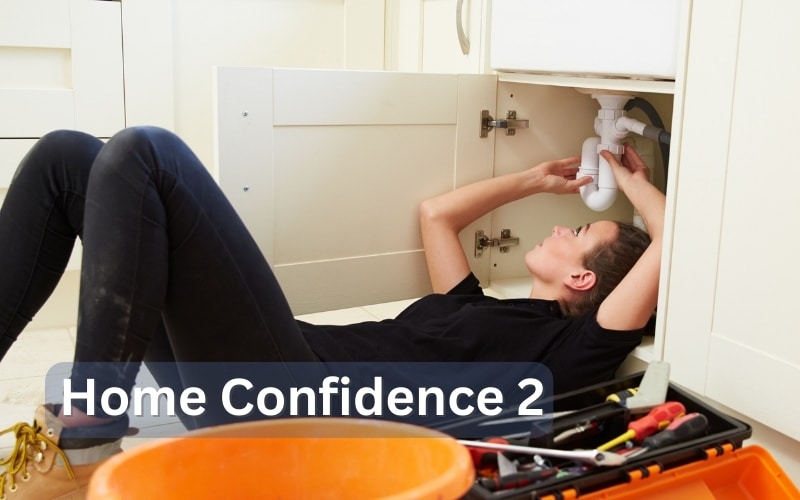
Learn to change a Tap on our DIY Plumbing Course in Bristol
Home Confidence 2

Want to understand how your Kitchen & Bathroom Plumbing works?

Learn all about Taps, Traps & Wastes on our half-day hands-on DIY Course for beginners.

Discover what goes wrong, why and how to prevent it happening. Save money by avoiding  costly plumbing call-outs and disasters

£80

Our Project Power Tool Courses

Learn to lay a Wooden Floor on our DIY Course
Installing a Wooden Floor

Always wanted beautiful wooden floors but worried about making a mistake? On this Half-Day Course, you’ll learn how to measure, cut, and fit flooring using power tools safely and confidently.

We’ll cover every step, from prep to finishing touches, so you can go home and install a new floor of your own. 

£80

Learn to install Skirting board on our DIY Course
Installing Skirting Board

On this Half-Day Course, you'll learn how to measure, cut, and fit skirting boards with confidence.

We’ll show you how to use power tools safely, get neat corners, and create a professional  finish.

All tools & materials included. No experience needed.

£80

Learn to Box-in Pipes on our DIY Course in Bristol
Boxing-in Pipes

On this Full-Day Course, you'll learn how to hide exposed pipes and awkward corners with confidence. This hands-on course teaches you how to measure, cut, and build simple boxing using power tools like jigsaws and drills, even if you’re a total beginner. Tidy up your space and pick up practical DIY skills in a friendly, supportive group. All tools and materials provided!

£130

Our Evening DIY Clubs

Beginners DIY Club
Beginners DIY Club

Hands-on, Fun, DIY Club to get Beginners started opn their DIY Journey. Learn essential DIY Skills in a relaxed -friendly environment.
Go home with new skills to start making home improvements with confidence and success.

Evenings over a 4-week term

£110

(4-week term)

Women-only DIY Club
Women-only DIY Club

Supportive, friendly DIY Club, just for women.

Learn essential DIY Skills; Get hands-on with DIY projects so that you can start making a start on all those DIY projects at home.

Evenings over a 4-week term

£110

(4-week term)

Intermediate DIY Club - take your DIY skills to the next level
Intermediate DIY Club

Take your DIY skills to the next level. Build on our Beginners DIY Clubs to start planning projects and get them finished. Learn to use more Power tools to expand your DIY possibilities.

Very hands-on and confidence-building.

Evenings over a 4-week term

£110

(4-week term)

Find Us

Workshop Location

Address

bePractical Ltd 33 Brislington Hill Bristol BS4 5BE

Transport

There is ample FREE parking at the rear of bePractical Workshop. 

We are also on the main Bus route from Bristol to Bath, so there is a regular Bus Service to &  from Bristol Temple Meads Railway Station.