4 Things you should do when you move into a New Home

Advice

FAQ

Comments

Related DIY Advice

Find Us

Our DIY Courses

Advice

FAQ

Comments

Related DIY Advice

Find Us

Our Courses

4 Things you should do when you move into a New Home

by | Oct 27, 2024

The Essential Stuff You Should Know

This may not be what you first think of when you move into a new home, but it could save you alot of money. Think of this as a “getting to know your home” exercise.

These are essental checks thatyou should make in your New Home.  They could save you money and might even save your life. They will definitely stop a plumber from giving you that pitying look when you’re not sure where the water turns off.

Step 1:

Put the Kettle on

We all know nothing productive happens without a cuppa first. So, brew up and let’s crack on.

Step 2:

  Find Your Fusebox

You might think you know where the Consumer Unit (fuse box, for us mere mortals) is, but let’s be sure, shall we?


Now, ask yourself these important questions:
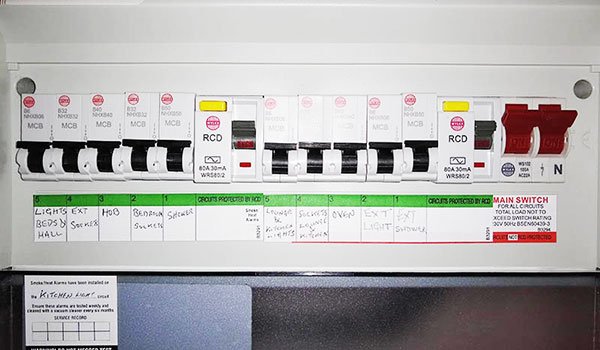
Consumer Unit with TWO RCDS

Can I turn it off in an Emergency?

Go on, try switching it off and back on again. If it’s buried at the back of a cupboard, do yourself a favour and keep the path clear – no one wants to dig through old paint cans or a mountain of camping gear in an emergency. Also, maybe avoid storing anything flammable in there? Just a thought.

Is it labelled properly?

Can you clearly tell which switch controls what, or does it feel more like a raffle? If it’s the latter, sorting that out should be a priority. If you’re not sure how to do this, check out our post on Consumer Units

Do you have an RCD?

(Residual Current Device)

If you’ve no idea what that is, have a look at Electrical Safety First, who explain what they are, and why they are an extremely good thing to have. It’s important.

If you do have one, test it! Press the “T” or “Test” Button and make sure it’s still doing its job. A little maintenance never hurts.

What type of Consumer Unit do you have?

This probably seems a bit of strange question, but its good to know the answer. You may have listened to your Solicitor’s advice and had an electrical survey carried out as part of the buying process. If you did, you should know a bit more about this, and should have a certificate to refer to. If you’re not sure what the certificate actually tells you, go back to the electrician who carried out the inspection for you. They can explain. Failing that, you can always contact us, and we can explain it to you.

If you didn’t have an electrical inspection, check out our post on Consumer Units – Know your Stuff. There’s a bit of useful information there, explaining what you’e looking.

Look for a Smoke & Heat Detectors

Hopefully your new Home has Smoke and Heat Detectors installed. If they do, please give them a quick Test, by pressing the TEST button. Check the Expiry date while you’re there.

If you can’t find any Smoke/Heat Detectors, or they are past their expiry date, please make getting new ones installed a priority.

Check out our post on Smoke Detector Safety, if you need more information

And lastly……..Take a Meter Reading

You don’t want to be paying for the last occupants’ Electricity, so take a Meter reading and submit it to your supplier. Ideally, take a photo of the reading, so that you have a Time & Date Stamp to refer back to.

Step 3:

Find out where your Water turns off

You’d be surprised how many people have no clue how to turn off their water. In fact, a lot of people who come on our DIY courses haven’t a clue either. I get it – it’s not something you think about until water’s gushing from somewhere it really shouldn’t be. But trust me, you don’t want to be on a frantic treasure hunt while the insurance claim’s ticking up.

1. Start Outside – Look for the Pavement cover

You’ll probably find a small cover near your front gate. That’s often where the external stopcock is installed. If you live in a flat, identifying which one’s yours can be a bit of a guessing game. Turning them off one by one works, but it might lead to some awkward neighbourly encounters (especially if they’re mid-shower).

It should look something like this. It might even have “Water” written on it:

Take a Meter Reading

If you find it, and it has a meter, take a meter reading. Again, I would take a photo, just for posterity.

Its also worth double-checking that it doesn’t keep running when you’ve turned the supply off. If it does, then you may be paying for someone else’s supply. Rare, but not impossible

2. Check Indoors

The usual suspects are under the kitchen sink or in a utility room, but I’ve come across them in all sorts of weird places – under floorboards, hidden in random cupboards. Start with the obvious and work your way to the downright bizarre.

Check out our other post on Finding Your Stop Tap

3. Still Can’t Find It?

Ask your new neighbours. They might have the same setup and could save you some time. If that doesn’t work, contact your water supplier. They might have a record of it.

If you’re still out of luck, put it on your to-do list and get a plumber involved. They can install an Internal stop tap in a more sensible spot.

Step 4:

Find out where your Gas/Oil turns off

Your gas meter is likely to be near the front of the house, possibly in a little box outside. Make sure you can turn it off without too much faff. If it’s locked up, get yourself a meter box key. They’re cheap as chips at a local DIY/Hardware store.

LPG or Oil

These tanks aren’t exactly discreet – you’ve probably tripped over them a few times already. Just double-check you know where the shut-off valve is, and maybe have a quick peek at security while you’re at it – oil theft’s a thing in the countryside.

Look for a Carbon Monoxide Detector

If you have a Gas or solid-fuel Boiler, or a multi-fuel stove, you also need to have a Carbon-Monoxide Detector.

If you can’t find one in your new home, please pop down to the nearest DIY/Hardware store/Supermarket & buy one NOW.

You may have no idea when the last service was carried out on these appliances.

You don’t want your first night in your new home to be your last. I know that sounds dramatic, but Carbon Monoxide is invisible. It doesn’t smell, and it can kill you very quickly.

Step 5:

Enjoy your New Home

You’ve just ticked off three essential checks that most people ignore until disaster strikes. Sure, dealing with a crisis is a crash course in home maintenance, but wouldn’t you rather be prepared than panicked?

If you’re renting, your landlord really should have told you all this. If they didn’t, maybe give them a gentle nudge – it’s in their best interests too, after all!

Give yourself a Round of Applause

FAQ

What do I do if I can't find my Stop Tap

Contact your local Water Supplier as soon as possible. They may know where it is. If you don’t have an external water supply, they wll supply one for you.

Talk to your neighbours. If the layout of their property is the same as yours, they may well know where the Stop tap was originally installed.

Neighbours are a very useful source of information about your home.

What if I can't switch my RCD back on?

This suggests that there is either a fault with the RCD, or wth your installtion. 
Check out our post “Help, I have no Power”
This will take you through the procedure to follow to locate the source of a fault, and get your system back up an running

Can you replace a Smoke Detector yourself?

Yes. Most mains-operated Smoke and Heat detectors, can easily be replaced. The Detector part usually slides or twists off the base, so that you can disconnect them. andreplace with a new one.
Make sure that you turn the power to the circuit off, before you disconnect the smoke detector.

Smoke Detectors may be on their own circuit, or they may be part of a lighting circuits.

Some Smoke Detectors may be so old that they are no longer manufactured. Sometimes Manufacturers make a new model which fits the base of your model. Check out the SafeLincs Website for “Backward Compatibility”

Who can benefit from a DIY course?

Anyone can benefit from a DIY course, especially beginners looking to build confidence and learn essential home improvement skills.

What topics are covered in your DIY home improvement courses?

Topics include using  hand tools and power tools, carrying out basic repairs in the home, woodworking and carpentry projects, plumbing skills, electrical work, and creative projects tailored to individual needs.

What should I bring?

We recommend wearing old clothing, and sturdy shoes. In the colder months, we suggest that these are warm, or layered. It can get cold in the Workshop.

If you have long hair, we strongly recommend that, for your own safety,  you keep it tied up while you are using any power tools.

If you would like to bring your own PPE (Personal Protectve Equipment), please feel free to do so. We will provide PPE, but we know that some people would prefer to use their own. (We recommend that you mark them up with your names, so that you can identify them)

Are your courses suitable for women?

Definitely. bePractical DIY specialises in empowering women to tackle home projects with confidence. However, we encourage anyone to sign up to our DIY courses, regardless of gender. We provide a safe space for anyone to learn hands-on practical skills. 

We also run Women-only DIY Clubs in the evenings. 

Can I do TWO Courses on the Same Day?

Yes. That’s no problem. We run courses that follow on from each other on the same, so that you can.

We offer a £20 Discount when you book TWO Courses at the same time. 

We guarantee that the days will be fun and empowering, but they may also be tiring. Remember you will be learning lots of new information and skills, and so may find the day tiring. Please bear that in mind.

What tools and materials do I need for DIY Training?

We provide all tools and materials. You only need to bring yourself and an enthusiam to learn.
You’re very welcome to bring your own tools, if you’d like to learn how to use them and get some practice. 

How long do DIY workshops typically last?

Our DIY workshops vary in length, depending on your need.

We run 2-hour long Bitesize courses, to give you a taster of a DIY Skill.

We run several Half-Day courses in general  DIY skills, DIY Plumbing skills and Carpentry Skills.

We also run evening DIY Clubs – 2 hours each week over a 4-week term 

How do I book, and where are you based?

You can book online at bePractical DIY.

We’re based in Bristol, with small group classes for lots of personal attention.

Can I buy this DIY Course as a gift?

Absolutely. Great idea. The perfect gift for the persoon who wants to build some self-confidence: Gift vouchers are available here.

Can I take DIY lessons at home?

Yes, we offer personalised DIY lessons, with our DIY Assist Service,  in your home to help you tackle specific projects.

We come to your home to help you work through your DIY Jobs list.

What if i have a question after the course?

We offer ongoing support by email, WhatsApp, or phone. We know how important it it to have support when you are doing your DIY projects. That’s why we’re here.

We’ll also send you comprehensive follow-up notes for the course, so that you don’t have to take notes. We want you to get as much out of the course as possible. 

No such thing as a daft question here!

Got another Question?

Drop us an email, or send us a message using our Online Contact Form

You May Also Like...

Check out our DIY Courses – there’s something for everyone

Our Half-Day DIY Courses

Nailing it! DIY for Beginners

Discover the joy of learning how to do DIY at home in a fun and interactive way. If you’ve always wanted to explore the world of DIY but didn’t know where to start, this course is perfect for you.

Learn to use hand tools safely, discover exciting things about screws and finish off learning to use drills and impact drivers. 

Fun! Fun! Fun!

£80

DIY "Next Steps"

Ever wondered how to drill into a wall without making a mess ,or felt nervous about putting up a shelf? This is the place for you.

Join our DIY "Next Steps" Course to take your DIY skills to the next level, and learn to drill into all kinds of walls, put up shelves and choose the right fixing.

Its not magic. Its DIY

£80

Home Confidence 1

Master your home’s plumbing in one practical Half-day session

Learn the ins and outs of Home Plumbing  at home in a fun and informative way.

No more panic, no more uncertainty, no more unnecessary emergency call-outs. This hands-on workshop gives you knowledge & confidence to handle common plumbing situations.

£80

Home Confidence 2

Want to understand how your Kitchen & Bathroom Plumbing works? Learn all about Taps, Traps & Wastes on our half-day hands-on DIY Course for beginners.

Discover what goes wrong, why and how to prevent it happening. Save money by avoiding  costly plumbing call-outs and disasters

£80

Our Project Power Tool Courses

Installing a Wooden Floor

Always wanted beautiful wooden floors but worried about making a mistake? On this Half-Day Course, you’ll learn how to measure, cut, and fit flooring using power tools safely and confidently. We’ll cover every step, from prep to finishing touches, so you can go home and install a new floor of your own. 

£80

Installing Skirting Board

On this Half-Day Course, you'll learn how to measure, cut, and fit skirting boards with confidence. We’ll show you how to use power tools safely, get neat corners, and create a pro finish.
All tools & materials included. No experience needed.

£80

Boxing-in Pipes

On this Full-Day Course, you'll learn how to hide exposed pipes and awkward corners with confidence. This hands-on course teaches you how to measure, cut, and build simple boxing using power tools like jigsaws and drills, even if you’re a total beginner. Tidy up your space and pick up practical DIY skills in a friendly, supportive group. All tools and materials provided!

£130

Our Evening DIY Clubs

Beginners DIY Club

Hands-on, Fun, DIY Club to get Beginners started opn their DIY Journey. Learn essential DIY Skills in a relaxed -friendly environment.
Go home with new skills to start making home improvements with confidence and success.

Evenings over a 4-week term

£100

(4-week term)

Women-only DIY Club

Supportive, friendly DIY Club, just for women.

Learn essential DIY Skills; Get hands-on with DIY projects so that you can start making a start on all those DIY projects at home.

Evenings over a 4-week term

£100

(4-week term)

Intermediate DIY Club

Take your DIY skills to the next level. Build on our Beginners DIY Clubs to start planning projects and get them finished. Learn to use Power tools to expand your DIY possibilities.
Very hands-on and confidence-building.

Evenings over a 4-week term

£100

(4-week term)

Find Us

Workshop Location

Address

bePractical Ltd 33 Brislington Hill Bristol BS4 5BE

Transport

There is ample FREE parking at the rear of bePractical Workshop. 

We are also on the main Bus route from Bristol to Bath, so there is a regular Bus Service to &  from Bristol Temple Meads Railway Station.